Skull
Reviewed field entry.
This page explains a term used by Anatomy Steward’s digital museum and teaching resources.
Entry context: Anatomy Steward Wiki › Osteology › Skull
Definition
Section titled “Definition”A skull is a complex bony structure that protects the brain and supports the jaws, teeth, eyes, nasal openings, and muscle attachments.
Why It Matters
Section titled “Why It Matters”Skulls are useful teaching objects because many structures are visible at once: teeth, jaw form, eye socket position, nasal openings, and attachment areas.
Museum Use
Section titled “Museum Use”A skull record may include object type, taxon group if known, source type, representation status, sensitivity level, access level, and related exhibit links.
Teaching Use
Section titled “Teaching Use”Students can compare skulls by first looking at tooth shape, jaw depth, orbit placement, and chewing surfaces before reading a label.
Cautions
Section titled “Cautions”Do not identify diet, behavior, or species from a single feature. Skull interpretation should compare multiple features and remain cautious.
Diagram to Add
Section titled “Diagram to Add”A future diagram for this entry should show:
- Lateral skull diagram with labels for teeth, orbit, mandible, nasal opening, and jaw joint.
- Use neutral line art. Avoid graphic or sensational imagery.
Diagram notes: use calm educational line art, clear labels, alt text, image credit, and rights status.
Related Terms
Section titled “Related Terms”Use with Museum Pages
Section titled “Use with Museum Pages”This wiki entry is designed to support these Anatomy Steward museum pages:
Related Museum Pages
Section titled “Related Museum Pages”- Skulls, Teeth, and Diet Exhibit
- Generalized Carnivoran Skull
- Generalized Herbivore Skull
- Anatomy Steward Digital Museum
Sources and Further Reading
Section titled “Sources and Further Reading”The following public sources support this entry. They are provided for definition review, teaching context, museum documentation language, or rights/digital preservation context.
- OpenStax — The Skull — Public textbook source for skull structure and the mandible as the movable lower jaw.
- Animal Diversity Web — Mammalia — Public reference for skull and dentition characteristics used in mammalian comparison.
- Animal Diversity Web — Spinning Skulls — Public educational collection showing skulls, teeth, and other structures as digital teaching resources.
Source Review Note
Section titled “Source Review Note”These sources are public references for educational and museum documentation use. They do not replace professional, legal, conservation, taxonomic, or collection-specific review.
Diagram
Section titled “Diagram”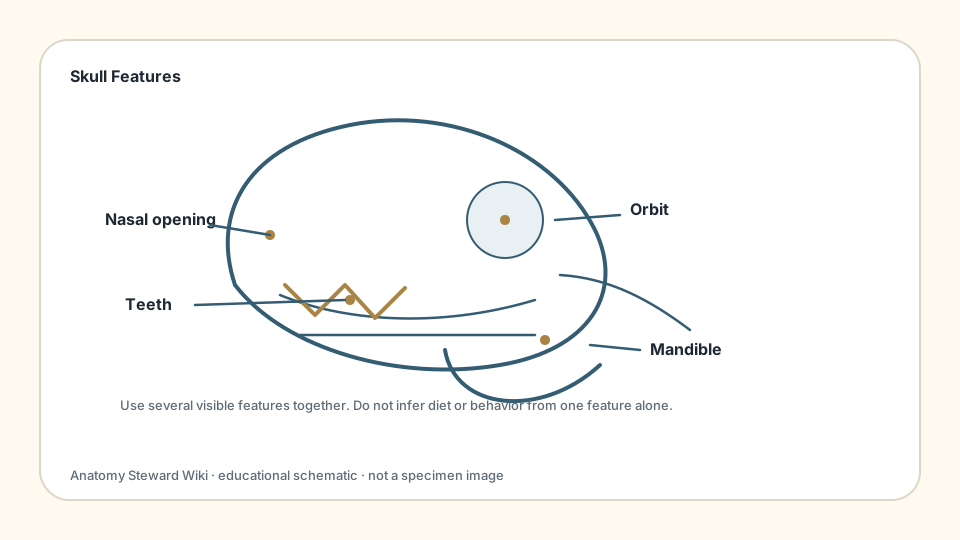
Key Observations
Section titled “Key Observations”- Tooth shape
- Jaw depth
- Orbit placement
- Nasal opening shape
- Attachment areas for jaw muscles
Common Misunderstandings
Section titled “Common Misunderstandings”- A skull alone does not prove a full diet or behavior pattern.
- Forward-facing eyes are not a single rule for identifying predators.
- Large teeth should not be interpreted without cheek teeth and jaw form.
Field Note
Section titled “Field Note”Skulls are strong teaching objects because they concentrate feeding, sensory, respiratory, and structural features in one visible form.
Mini Teaching Activity
Section titled “Mini Teaching Activity”Before reading a label, ask students to identify three visible features and write one cautious inference for each.
Contribution Ideas
Section titled “Contribution Ideas”This entry can be improved with:
- Public skull comparison references
- Teaching prompts for skull observation
- Public-domain skull diagrams or plates
Search Keywords
Section titled “Search Keywords”skull anatomy, animal skull, comparative osteology, teeth jaw eye socket
Teacher Use
Section titled “Teacher Use”Use this entry before the 3-Minute Museum Route. Ask students to identify teeth, jaw shape, and orbit placement before reading the object label.
Improve This Entry
Section titled “Improve This Entry”Help improve this reviewed wiki entry.
See a clearer definition, better public source, correction, teaching use, or image lead?
📝 Suggest a Correction, Source, or Teaching Use
Suggestions may include:
- a public source
- a correction or safer wording
- a related museum page
- a teaching activity
- an image or diagram lead with clear rights information
- a question that would make this entry easier to understand
Reviewed Status
Section titled “Reviewed Status”Version 2 field note. This page is part of the reviewed Anatomy Steward Wiki and is not open for direct public editing. Suggestions should be submitted through the reviewed contribution process.
Cite this term
Anatomy Steward Wiki. “Skull.” Anatomy Steward Wiki. https://wiki.anatomysteward.com/osteology/skull/